
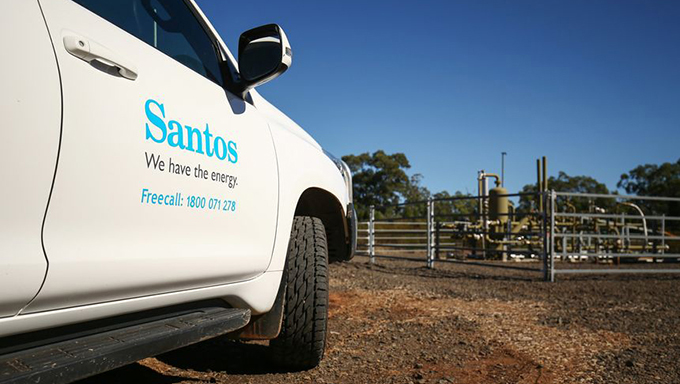
SYDNEY—One of Australia’s largest energy companies said it would proceed with the $2.6 billion development of a large oil field in Alaska, illustrating how the Ukraine war is providing impetus to alternative sources of supply to Russian crude.
Santos Ltd. STO 1.53% , which has a market value of more than $16 billion, said the first phase of the Pikka oil project on Alaska’s North Slope would add an estimated 80,000 barrels per day of crude oil to the market after it starts up in 2026.
Crude from the Pikka development, which is sandwiched between two existing oil fields, would be transported using existing infrastructure on the North Slope, including the Kuparuk pipeline and the Trans-Alaska Pipeline System, Santos said.
Moscow’s invasion of Ukraine has redrawn the global energy map as some Western governments end purchases of Russian crude oil and companies exit their Russian investments. Russia is the world’s third-largest oil producer behind the U.S. and Saudi Arabia, with European countries buying more than half of its oil exports prior to the outbreak of war in February.
The European Union in early June approved a ban on insuring shipments of Russian oil alongside a ban on imports of Russian oil that is set to go into effect later this year. While many developing countries, including China and India, continue to purchase Russian crude, some energy-company executives expect the country’s oil output to fall over time due to the loss of Western technology and capital.
Concerns over future energy security are giving companies more motivation to advance projects in countries such as the U.S., which is considered to have a stable regulatory regime, and support oil prices at a level that would allow developers to make an adequate profit.
“Global oil and gas markets are seeing increased volatility and countries are looking to diversify their supply sources away from Russia,” said Kevin Gallagher, Santos’s chief executive. “Low-carbon oil projects like Pikka Phase 1 respond to new demand for OECD supply and are critical for global and U.S. energy security,” he said.
Santos, which will invest $1.3 billion or roughly half of the project’s capital expenditure, estimates it can make a 19% return on investment if oil prices average $60 a barrel over the long term. Brent crude—the global oil-price benchmark—ended Tuesday at $92.34 a barrel to be up around 19% so far this year.
Mr. Gallagher said nearly 90% of expenditure on the project’s development would be in North America, minimizing the risk of supply-chain snarls for equipment such as steel pipes and drilling materials.
Santos acquired the Pikka project through its takeover of Australia-listed Oil Search in December, a deal that also gave it a bigger stake in the Exxon Mobil Corp.-operated PNG LNG gas-export project in Papua New Guinea. On Wednesday, Santos said it is in advanced talks over the sale of a 5% stake in the PNG LNG project, which would reduce its equity interest to 37.5%. Analysts think the 5% stake could fetch as much $1.4 billion.
The company said the development of the Pikka oil field is consistent with its goal of achieving net-zero emissions from its operations by 2040. That target doesn’t include emissions produced by customers when using Santos’s products, known as Scope 3 emissions.
Mr. Gallagher said the field contained low levels of carbon dioxide for an oil development and Santos has initial deals in place with Alaska Native corporations to develop carbon-offset projects.
No responses yet