Our Competition
Other CCUS technologies convert CO2 into a liquid form. The highly volatile liquid CO2 must be stored in underground reservoirs or other enclosures. In addition, the liquid CO2 must be monitored for leakage with no feasible mitigating action. As a result, CCUS technologies converting CO2 to liquid have high logistics, transportation, storage, and monitoring costs.
Our Advantage
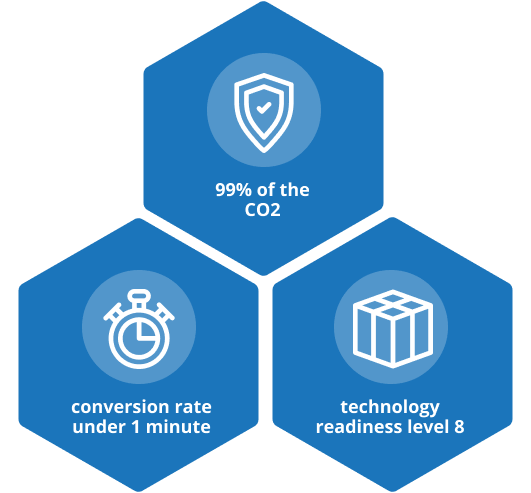
After developing the sub-scale demonstration pilot program, the company will launch full-scale development programs over several fossil fuel-powered industrial plants. The full-scale development programs will achieve technology readiness level 8 and commence commercial operations.
The patented technology captures 99% of the CO2 and subsequently converts the CO2 into commercial grade and storable CaCO3 (calcium carbonate), used in fertilizer, construction materials, and biofuel additives. The CCUS technology has a high conversion rate in under a minute. The CO2 converted to storable CaCO3 qualifies for US 45Q tax credits.
Other CCUS technologies convert CO2 into a liquid form. The highly volatile liquid CO2 must be stored in underground reservoirs or other enclosures. In addition, the liquid CO2 must be monitored for leakage with no feasible mitigating action. As a result, CCUS technologies converting CO2 to liquid have high logistics, transportation, storage, and monitoring costs.
The CCUS technology has a high-speed conversion rate and high conversion efficiency since the catalyst utilized in the mineralization process is selective to CO2 being fed into the reactor, making the CAPTICO2 CCUS technology ideal for retrofitting to existing plants with space constraints and also makes it highly competitive due to its energy-efficient cryogenic capturing ability.
The CCUS technology has strong synergies between CO2 mineralization and cement manufacturing, making the CAPTICO2 CCUS technology highly competitive with respect to applications for cement plants in the commercial marketplace in the United States.
The Market
Several factors can explain the slow uptake of CCUS, but the high cost is a major factor. CCUS has been cited as being too expensive and unable to compete with wind and solar electricity given their spectacular fall in costs over the last decade, while climate policies including carbon pricing are not yet strong enough to make CCUS economically attractive. However, to dismiss CCUS technology on cost grounds would be to ignore its unique strengths, competitiveness in key sectors, and potential to enter the mainstream of low-carbon solutions.
The idea that CCUS is high cost ignores that the analysis consistently shows that a broad portfolio of technologies is needed to achieve deep emissions reductions, both practically and cost-effectively. Energy efficiency and renewables are central pillars, but other technologies and strategies have a major role to play as well.
In its recently published report, the IEA identified four crucial ways in which CCUS can contribute to a successful clean energy transition:
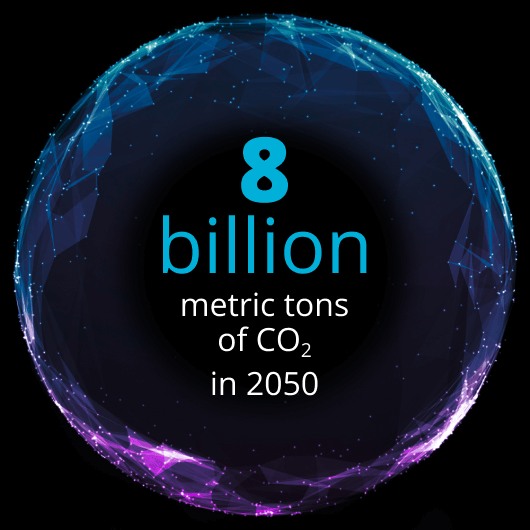
CCUS can be retrofitted to power and industrial plants that may otherwise still be emitting 8 billion metric tons of CO2 in 2050 – around one-quarter of today’s annual energy-sector emissions. CCUS can tackle emissions in sectors with limited other options, such as cement, steel and chemicals manufacturing, and in the production of synthetic fuels for long-distance transport.
CCUS enables the production of low-carbon hydrogen from fossil fuels, a least-cost option in several regions around the world. CCUS can remove CO2 from the atmosphere by combining it with bioenergy or direct air capture to balance emissions that are unavoidable or technically difficult to avoid.
Limiting the availability of CCUS would considerably increase the cost and complexity of the energy transition by increasing reliance on technologies that are currently more expensive and at earlier stages of development.